
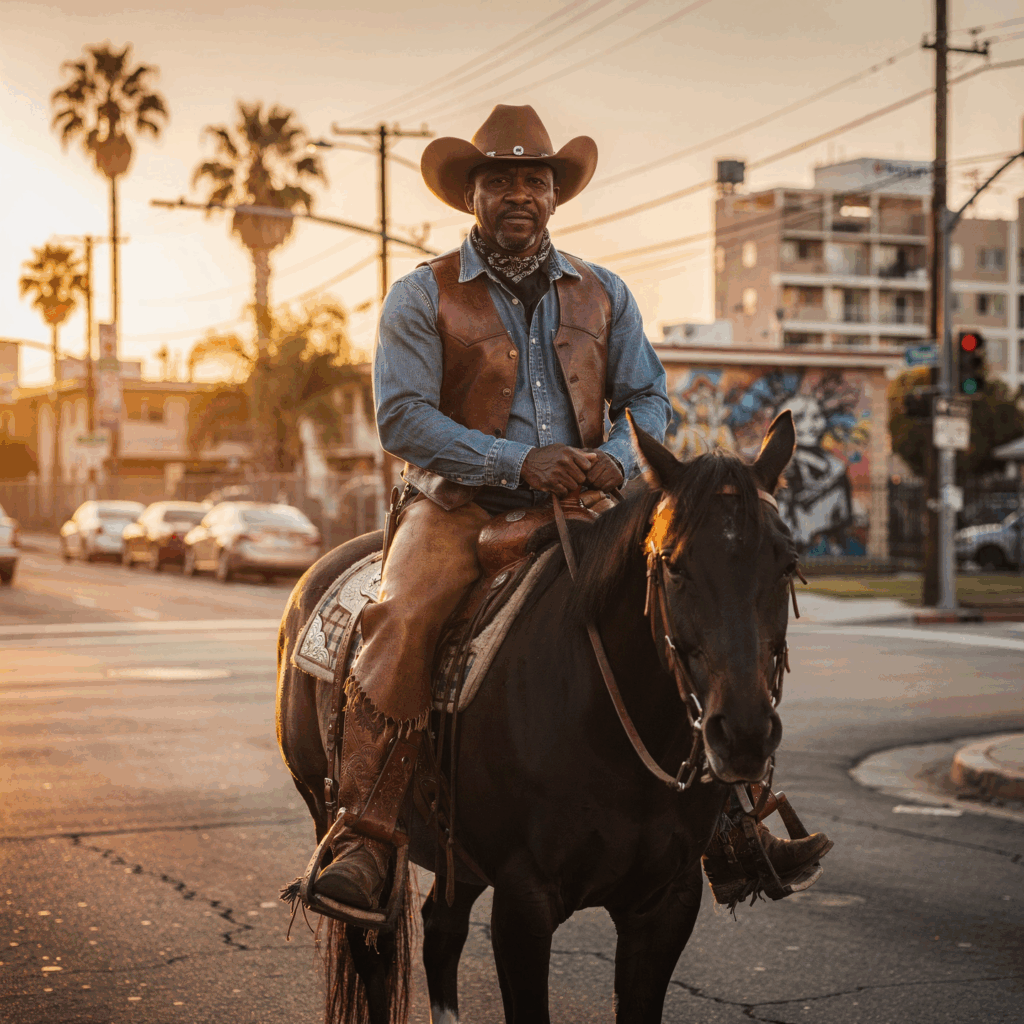
When most people think of Compton, California, they picture urban streets and hip-hop culture. Few realize that this Los Angeles County city has maintained a rich equestrian heritage spanning over a century—a legacy that challenges stereotypes and preserves authentic Western traditions in an unlikely urban setting.
The Roots of Black Cowboy Culture in Compton
Compton’s equestrian history dates back to the early 1900s when the area was predominantly agricultural, with sprawling ranches and farmland. As African American families migrated to Southern California seeking better opportunities, many brought their ranching skills and love for horses. By the mid-20th century, Compton had developed a thriving Black cowboy community that maintained horses, organized rodeos, and passed down horsemanship traditions through generations.
The Compton Cowboys represent the modern continuation of this heritage. Founded as a grassroots movement to preserve urban ranching culture, the organization has become a symbol of resilience, community empowerment, and cultural preservation. These urban cowboys challenge the narrative that Western heritage belongs exclusively to rural America, proving that horse culture can thrive anywhere there’s passion and dedication.
Why Urban Equestrianism Matters Today
Urban equestrian programs like Compton Jr. Equestrians serve a crucial role beyond just horseback riding lessons. They provide:
Youth Development and Mentorship: Horses offer therapeutic benefits and teach responsibility, discipline, and emotional regulation. For young people in urban environments, equestrian programs create positive alternatives to negative influences while building confidence and leadership skills.
Cultural Preservation: Black cowboys have been largely erased from mainstream Western narratives, despite making up an estimated 25% of all cowboys during the post-Civil War era. Urban equestrian centers actively reclaim and celebrate this overlooked history.
Community Connection: Stables and ranches become gathering places where families connect, traditions are shared, and intergenerational bonds strengthen. The simple act of caring for horses creates structure and purpose in communities that often lack green spaces and recreational opportunities.
Mental Health Benefits: Equine-assisted activities have proven therapeutic value for trauma recovery, anxiety reduction, and building emotional resilience—particularly important in underserved urban communities.
What Makes Compton’s Equestrian Scene Unique
Unlike traditional suburban riding academies, urban equestrian centers operate with different challenges and opportunities:
Adaptive Infrastructure: Stables are carved out of urban lots, with riders navigating city streets alongside their rural counterparts’ open trails. This requires creative problem-solving and community cooperation.
Authentic Cultural Connection: Programs rooted in Black Western heritage offer representation that’s missing from mainstream equestrian spaces, making horseback riding accessible to communities who might not otherwise see themselves in the sport.
Holistic Youth Programming: Urban equestrian centers often integrate academic support, life skills training, and career development with riding instruction—addressing the whole person rather than just teaching horsemanship.
Community-Driven Models: These programs rely heavily on volunteer support, community fundraising, and grassroots organizing, creating strong bonds between participants and their neighborhoods.
Selecting the Right Urban Equestrian Program
When choosing an equestrian center for your child or yourself, particularly in an urban setting, consider these factors:
Program Philosophy and Mission
Look for centers that prioritize character development alongside riding skills. The best urban equestrian programs explicitly connect horsemanship to life lessons, cultural pride, and community service. Ask about their approach to youth development and how they measure success beyond just riding competency.
Safety Standards and Credentials
Ensure instructors have proper certifications from recognized organizations like the Certified Horsemanship Association (CHA) or Professional Association of Therapeutic Horsemanship (PATH). Check that facilities maintain appropriate insurance, follow safety protocols, and keep horses healthy and well-cared-for.
Cultural Competency and Inclusivity
For families seeking authentic representation, evaluate whether staff and leadership reflect the community they serve. Programs rooted in cultural preservation should demonstrate deep knowledge of Black Western heritage and create welcoming environments for riders of all backgrounds.
Program Offerings Beyond Basic Riding
Comprehensive equestrian centers offer multiple pathways including:
- Beginner through advanced riding instruction
- Horse care and stable management education
- Competition preparation for rodeos or shows
- Leadership development and mentorship programs
- Community service opportunities
- Academic support or scholarship programs
Community Impact and Reputation
Research the program’s track record through testimonials, social media presence, and community partnerships. Programs with strong community ties typically produce better outcomes because they’re accountable to the families they serve.
The Compton Jr. Equestrians Difference
Compton Jr. Equestrians stands at the intersection of authentic Western heritage and modern youth development. Our program doesn’t just teach riding—we preserve culture, build character, and create pathways to success for young people who might not otherwise have access to equestrian experiences.
Located in the heart of Compton, our facility maintains the spirit of the original Black cowboys while adapting to 21st-century needs. We combine professional instruction with mentorship, cultural education with life skills training, and individual growth with community service.
Our Comprehensive Programs Include:
Youth Riding Lessons: Age-appropriate instruction from ground work through advanced riding techniques, taught by certified instructors who understand both horsemanship and youth development.
Horse Care Education: Participants learn grooming, feeding, stable maintenance, and equine health—developing responsibility and work ethic while bonding with horses.
Cultural Heritage Programs: Regular lessons on Black cowboy history, visits from community elders, and participation in cultural events that celebrate Western heritage.
Leadership Development: Older participants mentor younger riders, lead stable projects, and represent the program at community events—building confidence and communication skills.
Academic Support: Partnerships with local schools and tutoring programs ensure riding privileges reinforce educational achievement.
Preserving Heritage for Future Generations
The story of Compton’s cowboys isn’t just about the past—it’s about creating futures. Every young person who learns to ride in our program becomes part of a living tradition that stretches back generations. They discover that they belong in Western spaces, that their heritage includes cowboys and ranchers, and that horses can be partners in their personal growth journey.
Urban equestrianism proves that horse culture doesn’t require vast ranches or rural zip codes. It requires passion, community support, and commitment to passing traditions forward. As cities across America rediscover their hidden equestrian histories, Compton stands as a model for how urban communities can preserve Western heritage while building brighter futures for young people.
Ready to Join Our Community?
Schedule a Visit – Come see our facility, meet our horses, and learn how your family can become part of Compton’s equestrian legacy.
Enroll in Programs – Register for riding lessons, summer camps, or our year-round youth development program.
Support Our Mission – Donate, volunteer, or partner with us to keep urban cowboy culture thriving for the next generation.
Frequently Asked Questions
Q: Do I need previous horse experience to join your programs?
A: No experience necessary. We welcome complete beginners and provide instruction appropriate for every skill level, from first-time riders to those preparing for competition.
Q: What age groups do you serve?
A: Our programs primarily serve youth ages 8-18, with some activities available for younger children accompanied by parents. We also offer adult volunteer and community engagement opportunities.
Q: How much does it cost to participate?
A: We offer sliding scale fees based on family income and work hard to ensure cost is never a barrier. Scholarships, payment plans, and work-exchange opportunities are available for qualified families.
Q: What makes your program different from traditional riding stables?
A: We integrate cultural education, mentorship, and life skills development with horsemanship instruction. Our program is rooted in Black Western heritage and designed specifically to serve urban youth with holistic support beyond just riding lessons.